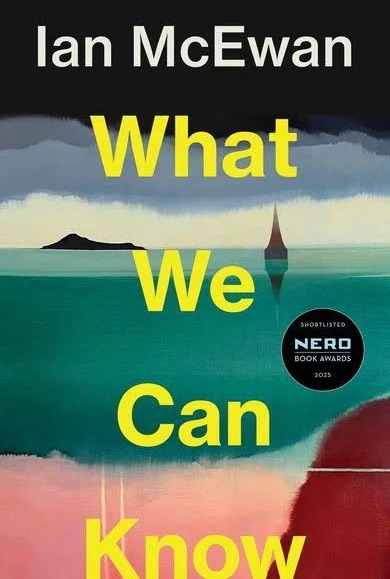
On 21 April 2026, six members of the DEG Book Club gathered for an engaging and thoughtful discussion of What We Can Know by Ian McEwan. The evening proved to be one of the club’s most intellectually stimulating meetings so far, as the insightful novel opened up a wide range of interpretations and philosophical questions.
At the heart of the discussion was the book’s exploration of truth, perception and the limits of human understanding. Members reflected on McEwan’s central question: how much can we ever truly know about other people, our history, the world around us, or even ourselves? Several participants pointed out that the novel deliberately avoids offering clear answers, instead encouraging readers to reflect and confront ambiguity and uncertainty.
One particularly lively part of the discussion focused on the reliability of perspective and memory. How does our memory of history shape our decisions for the future? Some readers interpreted the characters’ conflicting views as a commentary on the increasingly fragmented nature of truth in modern society, while others saw the novel as a more personal meditation on emotional distance, loneliness and the human need for certainty.
Another interesting point raised during the discussion was the role of the mysterious poem that the protagonist obsessively pursues throughout the novel. Several members suggested that the poem functions as a classic “MacGuffin” — a narrative device that drives the plot forward while ultimately being less important than the characters’ emotional and intellectual journeys. In this interpretation, the search for the poem becomes less about discovering a concrete truth and more about revealing the protagonist’s desires, anxieties and need for meaning. The group found this reading particularly compelling, as it reinforced the novel’s broader themes of uncertainty, projection and the elusive nature of knowledge itself.
The group also discussed McEwan’s elegant prose style and his ability to combine intellectual themes with deeply human emotions. While some readers admired the philosophical depth of the novel, others felt that the emotional restraint of the characters itself formed part of the author’s wider message about communication and misunderstanding.
As always, the discussion moved beyond literary analysis and led to broader reflections on contemporary society, science, ethics and the role of literature in helping us understand complex realities. Despite differing interpretations, all participants agreed that the novel provided rich material for conversation and demonstrated why book clubs remain such rewarding spaces for exchanging ideas.
DEG Book Club’s next pick
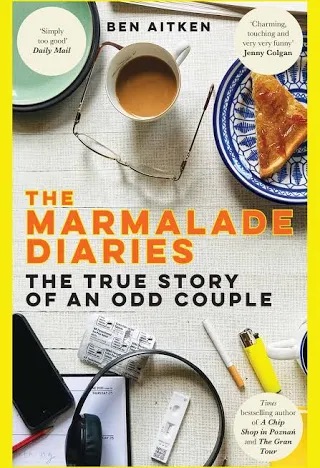
At the end of the evening, the group selected the next book for discussion: The Marmalade Diaries by Ben Aitken. The charming and humorous memoir tells the story of an unlikely intergenerational friendship that develops when the author moves in with an elderly widow as a lodger. Combining warmth, wit and touching observations about loneliness, ageing and companionship, the book promises to offer both entertaining reading and plenty of topics for discussion.
The next DEG Book Club meeting will take place on 16 June. New participants are always welcome.
DEG Book Club Rating
As part of our ongoing effort to reflect on and celebrate the books we’ve explored together, the DEG Book Club is compiling a running list of all past and current reads, complete with average star ratings (1 to 10) as given by our participants. This list will serve as a shared memory of our literary journey – and a helpful guide for anyone looking for thoughtful, diverse reading recommendations. Participants are encouraged to rate each book after our discussion and these are the ratings so far:
| 1. “Hamnet” – Maggie O’Farrell | September 25 pick | ⭐⭐⭐⭐⭐⭐⭐⭐⭐ (average of 9) |
| 2. “To Kill a Mocking Bird” – Harper Lee | July 25 pick | ⭐⭐⭐⭐⭐⭐⭐⭐ (average of 8.4) |
| 3. “The Shipping News” – Annie Proulx | May 25 pick | ⭐⭐⭐⭐⭐⭐⭐⭐ (average of 7.75) |
| 4. “What we can know” – Ian McEwan | April 26 pick | ⭐⭐⭐⭐⭐⭐⭐⭐ (average of 7.5) |
| 5. “The Road to Little Dribbling” – Bill Bryson | February 26 pick | ⭐⭐⭐⭐⭐⭐ (average of 5.8) |
| 6. “Going Zero” – Anthony Mc Carten | March 25 pick | ⭐⭐⭐⭐⭐⭐ (average of 5,75) |
| 7. “The Body” – Stephen King | July 25 pick | ⭐⭐⭐⭐⭐⭐ (average of 5,63) |
 using WordPress and