A Lively DEG Discussion About Talking Listening and Connecting
The DEG’s September Conversation Evening on 15 September brought together eight participants to discuss a question that concerns almost everyone: Are we losing the art of conversation? The topic proved to be an excellent choice and led to one of the liveliest and most engaging Conversation Evenings we have had.
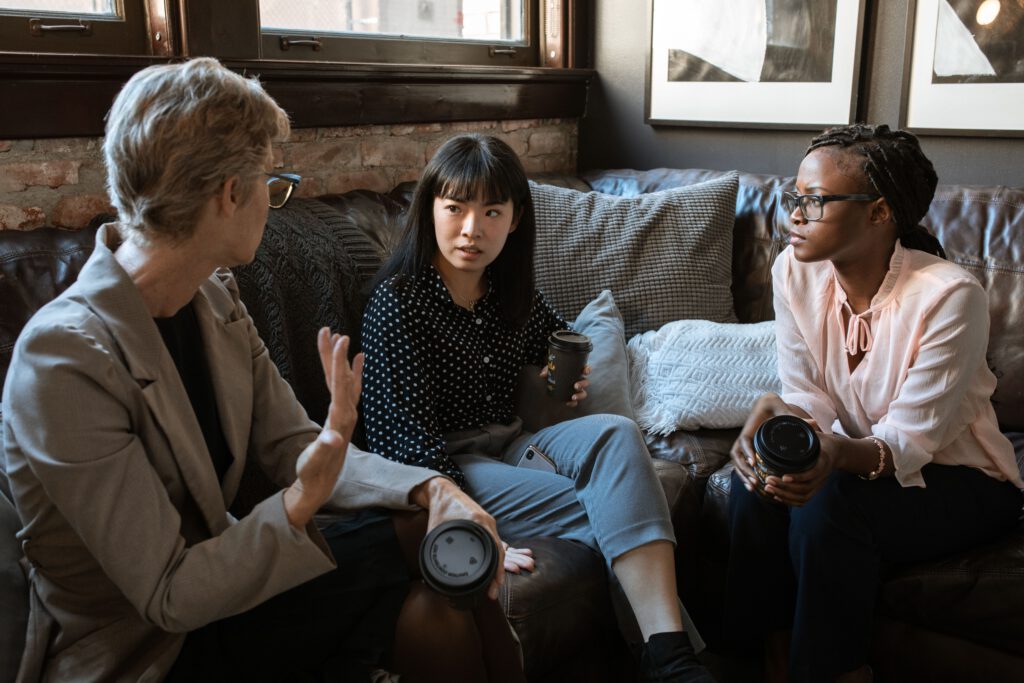
The evening began with a seemingly simple question: What makes someone a good conversationalist? Participants considered the importance of curiosity, attentiveness and asking the right questions. We also talked about memorable conversations, the role of small talk and whether it is easier to speak openly with close friends or with people we hardly know.
Small talk, often dismissed as superficial, was recognised as an important way of making contact and finding common ground. The discussion then turned to the ways in which our communication habits have changed. Messages have replaced many telephone calls, while conversations that once took place face to face are now often conducted through WhatsApp or other digital channels. Participants considered whether telephone calls are increasingly perceived as intrusive and whether sending a message before calling has become the new social norm.
Digital communication has undoubtedly made it easier to stay in touch and can help shy people express themselves. At the same time, written messages lack tone of voice, facial expressions and body language, leaving plenty of room for misunderstandings. Even the presence of a mobile phone on the table can affect the quality of a conversation, whether anyone is actively using it or not.
Another important part of the evening focused on listening. Are we becoming better at expressing ourselves but worse at listening to others? What makes us feel genuinely heard? Participants discussed interruptions, uncomfortable silences and the difference between listening attentively and simply waiting for an opportunity to speak. We also considered whether interruptions are always rude or can sometimes be a sign of enthusiasm and involvement.
The conversation became particularly thought-provoking when it moved towards disagreement. Why has it become so difficult to discuss political and social issues with people who hold different views? Can a good conversation change the way we understand another person without necessarily changing our own opinion? And is it still possible to disagree warmly, especially online? These questions prompted a lively exchange about patience, curiosity and our willingness to engage with perspectives we may strongly dislike.
Finally, we considered the relationship between conversation and loneliness. Are people lonelier because they talk less, or do they talk less because they are lonely? Participants also reflected on whether different generations genuinely have different conversational skills and what younger and older people might learn from one another.
The discussion flowed so easily that we could probably have continued for much longer. There were personal experiences, different perspectives and plenty of questions to explore. If the evening demonstrated anything, it was that the art of conversation is certainly still alive at the DEG.
Thank you to everyone who contributed to this particularly enjoyable and stimulating evening!
 using WordPress and