When was the last time you did absolutely nothing? No phone, no television, no to-do list, not even a book? And did you enjoy it, or did you immediately feel that you ought to be doing something useful?
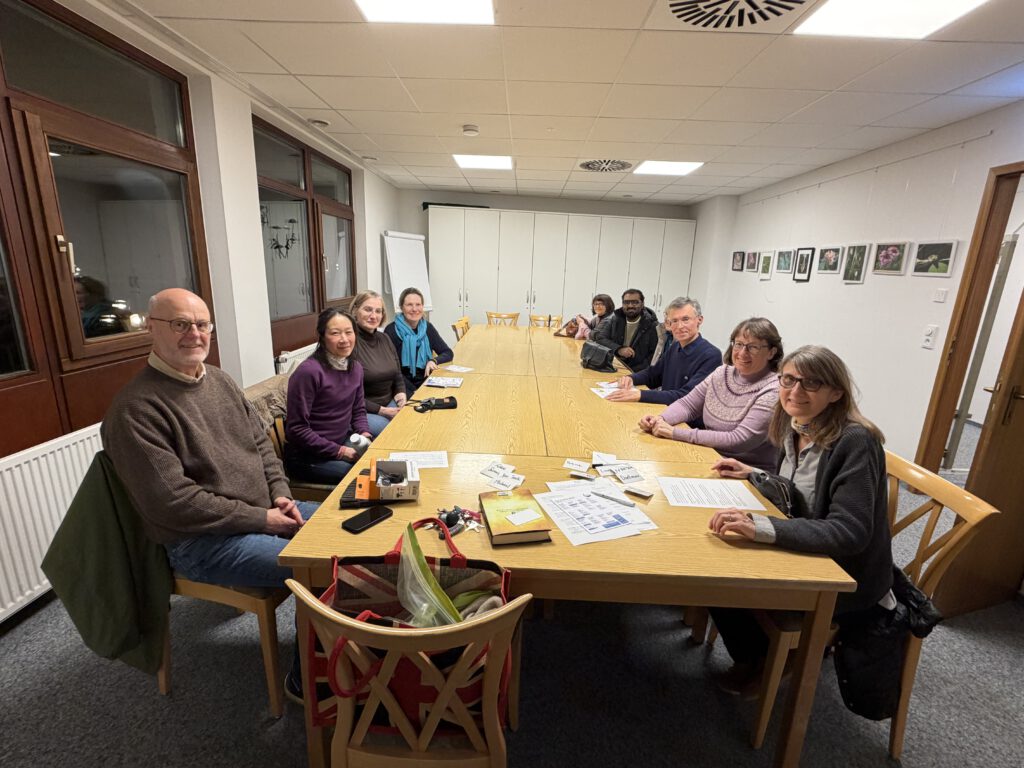
These were some of the questions at our latest DEG Conversation Evening on Tuesday, 17 November. With eleven participants, both members and non-members, and a lovely mix of younger and older people, we had a lively group ready to tackle a surprisingly tricky subject: Are we losing the art of doing nothing?
What does doing nothing actually mean?
It sounds simple enough, but defining doing nothing is harder than you might think. Does sitting in the garden count? What about going for a walk without a destination, reading a novel or simply letting your mind wander?
And then there is procrastination, something most of us are probably familiar with. We all occasionally put off things we know we should be doing. But is procrastination the same as taking a well-deserved break? Or is there a difference between deliberately enjoying a quiet moment and avoiding an unpleasant task?
Our conversation explored the sometimes blurry boundaries between rest, laziness and procrastination, as well as the pressure many of us feel to make every minute count.
No time to stand and stare
One of our starting points was a poem written more than a century ago. In Leisure, first published in 1911, the Welsh poet W. H. Davies asks a question that seems remarkably relevant today:
Leisure
W. H. Davies (1911)
What is this life if, full of care,
We have no time to stand and stare.
No time to stand beneath the boughs
And stare as long as sheep or cows.
No time to see, when woods we pass,
Where squirrels hide their nuts in grass.
No time to see, in broad daylight,
Streams full of stars, like skies at night.
No time to turn at Beauty’s glance,
And watch her feet, how they can dance.
No time to wait till her mouth can
Enrich that smile her eyes began.
A poor life this if, full of care,
We have no time to stand and stare.
Although Davies wrote these lines long before smartphones, social media and endless notifications, his message feels surprisingly modern. Even in 1911, people apparently worried that life was becoming too busy to appreciate the little things.
Today, we can fill almost every spare moment with something. Waiting for a bus? Check your phone. Five minutes between appointments? Answer an email. A free afternoon? Perhaps there is something productive we ought to be doing.
But do we really need to fill every moment?
Different generations, different experiences
Having several generations around the table added another dimension to our discussion. Our conversation material invited us to think about childhood boredom, changing attitudes towards work and leisure, and whether modern conveniences have actually given us more free time.
There are plenty of questions worth considering. Did children once have more opportunities to invent their own entertainment? Are we less comfortable with boredom today? And have we become so accustomed to being busy that even our hobbies sometimes feel like another task on the to-do list?
Perhaps doing nothing is not necessarily about being inactive. It might simply mean allowing ourselves a little time without expectations, deadlines or the need to achieve anything.
An evening well spent doing anything but nothing!
The irony, of course, is that we spent an entire evening actively discussing the art of doing nothing. But that is exactly what our DEG Conversation Evenings are about: exchanging ideas, listening to different perspectives, practising English and enjoying good company.
It was particularly lovely to welcome such a varied group, with familiar faces and newcomers joining the conversation.
A big thank you to all eleven participants for making it such an enjoyable evening!
Our Conversation Evenings are open to everyone, whether you are a DEG member or not. You do not need perfect English, just a little curiosity and a willingness to join in.
And perhaps, until we meet again, we can all take a moment to follow W. H. Davies’ advice and simply stand and stare.
 using WordPress and
No responses yet